We've been keeping a bit of a secret at Joley Aire, and we're finally ready to share some exciting changes coming to our Bernedoodle breeding program!
Our family has been breeding Bernedoodles for seven years now, and we continually fall more in love with this wonderful breed. Along the way, we've learned so much about their genetics, temperament, and the little nuances that make them uniquely special in the Doodle world.
Because Bernedoodles are a relatively new breed mix, we've also had the opportunity to watch (and participate in!) the development of thoughtful, selective breeding aimed at enhancing desirable traits and diminishing unwanted ones.
Over time, it's become increasingly clear to us that the ideal Bernedoodle combines the best characteristics of the Bernese Mountain Dog—their wonderful temperament, beautiful coloring, and sturdy build—with the low-shedding coat qualities of the Poodle.
And that's exactly the direction we're moving at Joley Aire!
Introducing Cooper and a New Direction
Until now, Joley Aire has produced primarily F1 Bernedoodles, which are 50% Bernese Mountain Dog and 50% Poodle. We've loved these puppies and the wonderful families they've joined, but we've also begun looking ahead.
Our ultimate goal at Joley Aire is to produce what are often called "Ultra Bernedoodles"—fully furnished, low-shedding dogs that carry a higher percentage of Bernese Mountain Dog genetics.
For a long time, the assumption has been that increasing the percentage of Bernese Mountain Dog automatically means sacrificing the low-shedding coat. But research and the experiences of other breeders have shown that this doesn't necessarily have to be the case!
Getting there requires careful planning, genetic testing, and patience. It's not something that can happen overnight, but we believe it's a worthwhile direction for our breeding program.
And that brings us to Cooper!
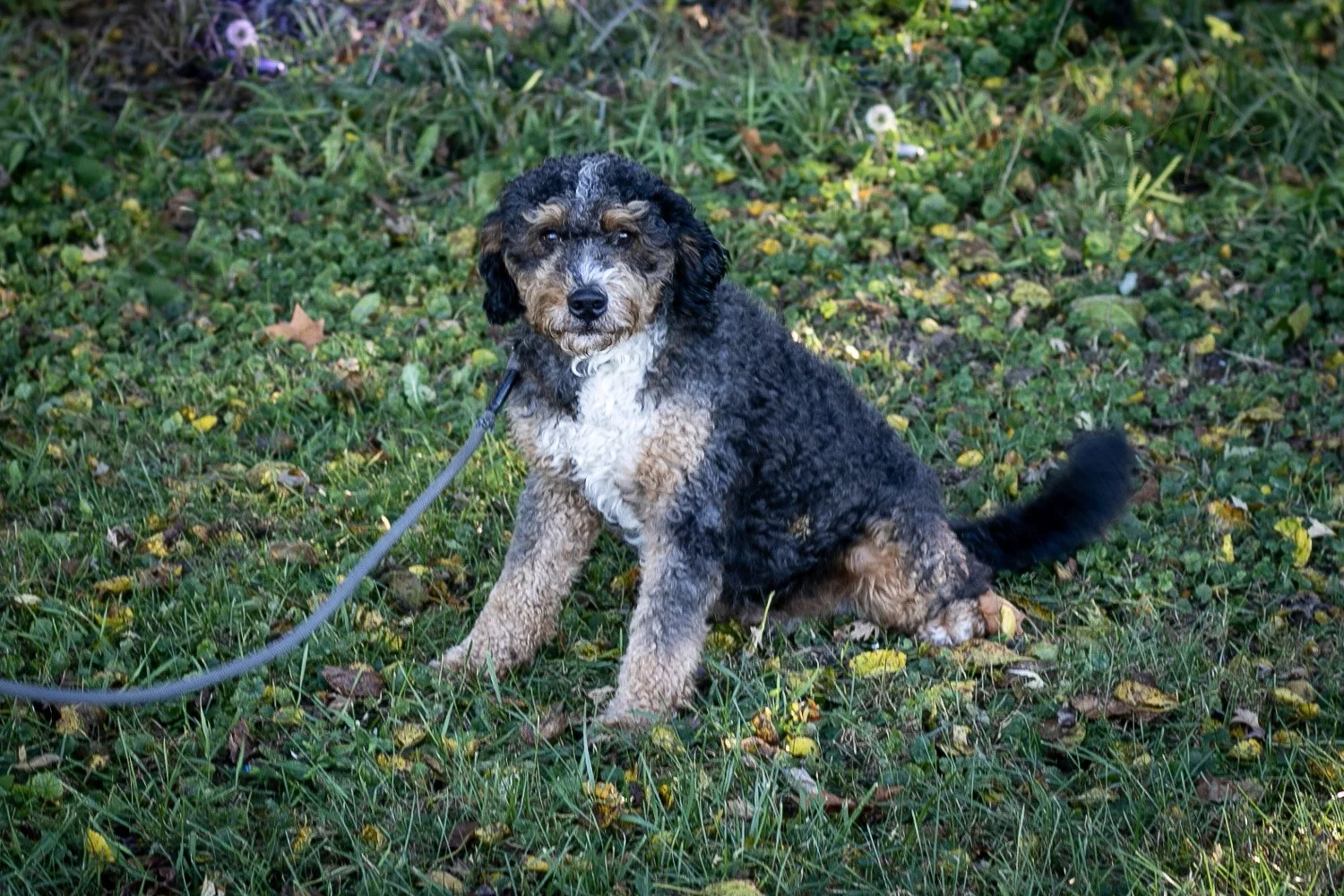
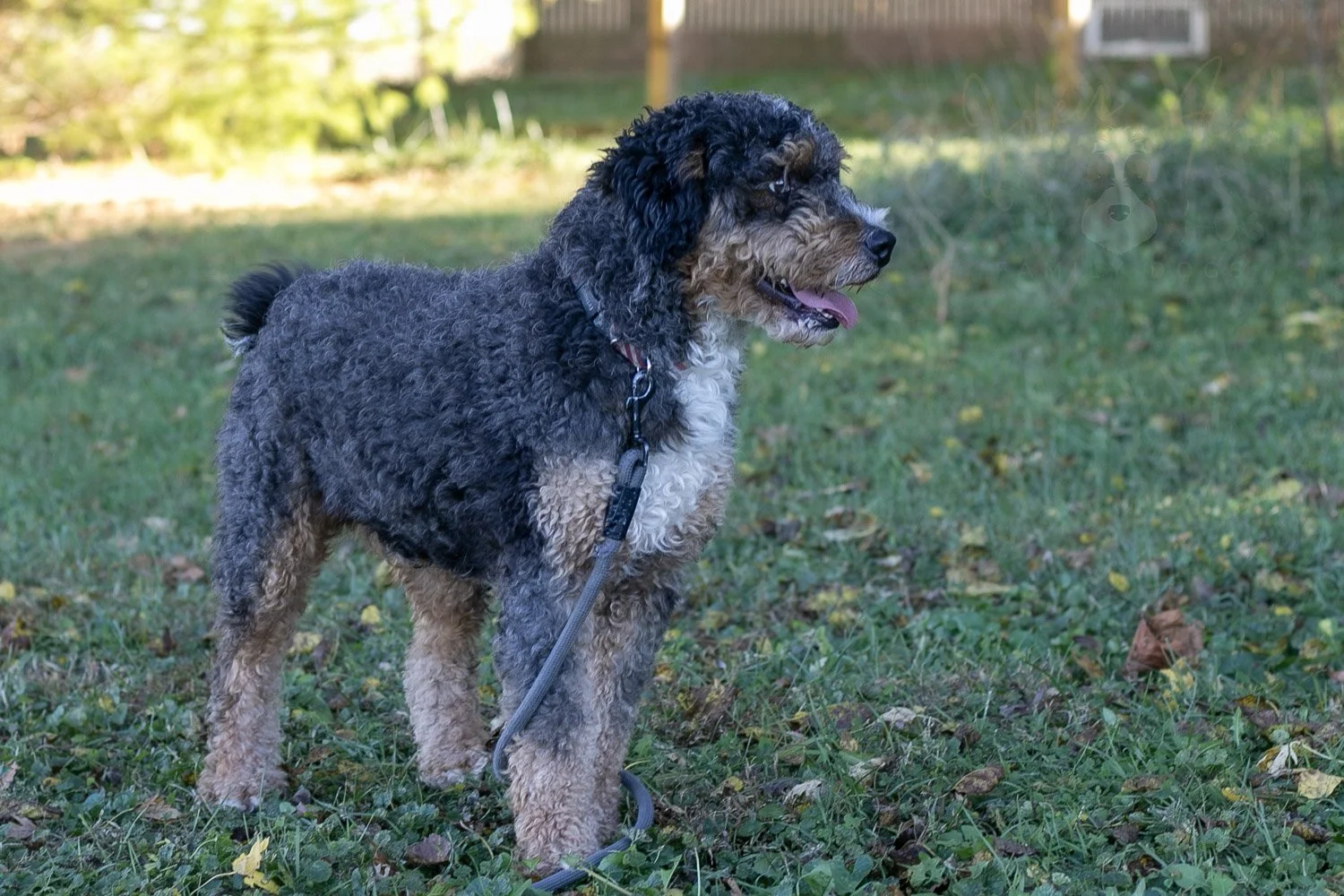
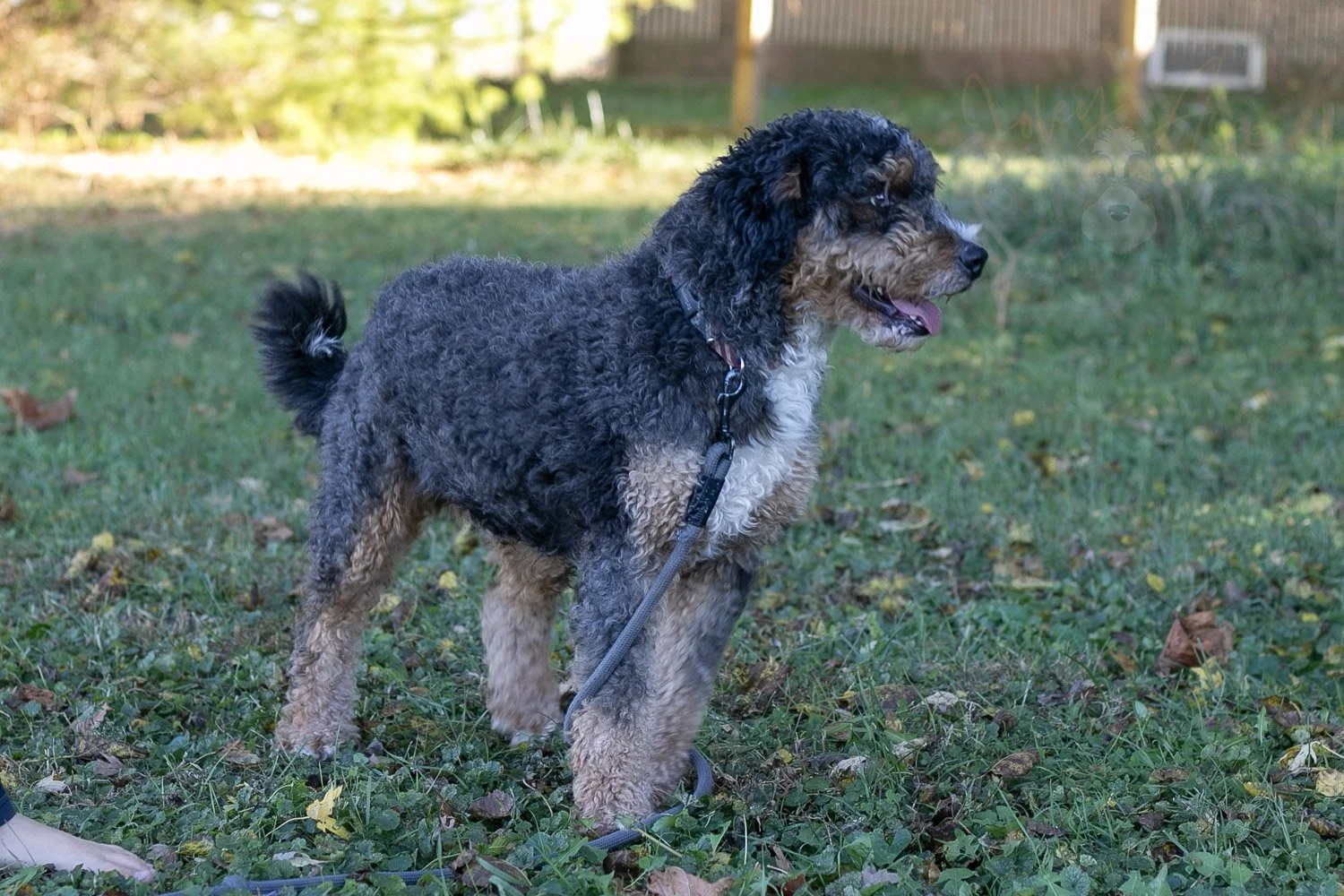
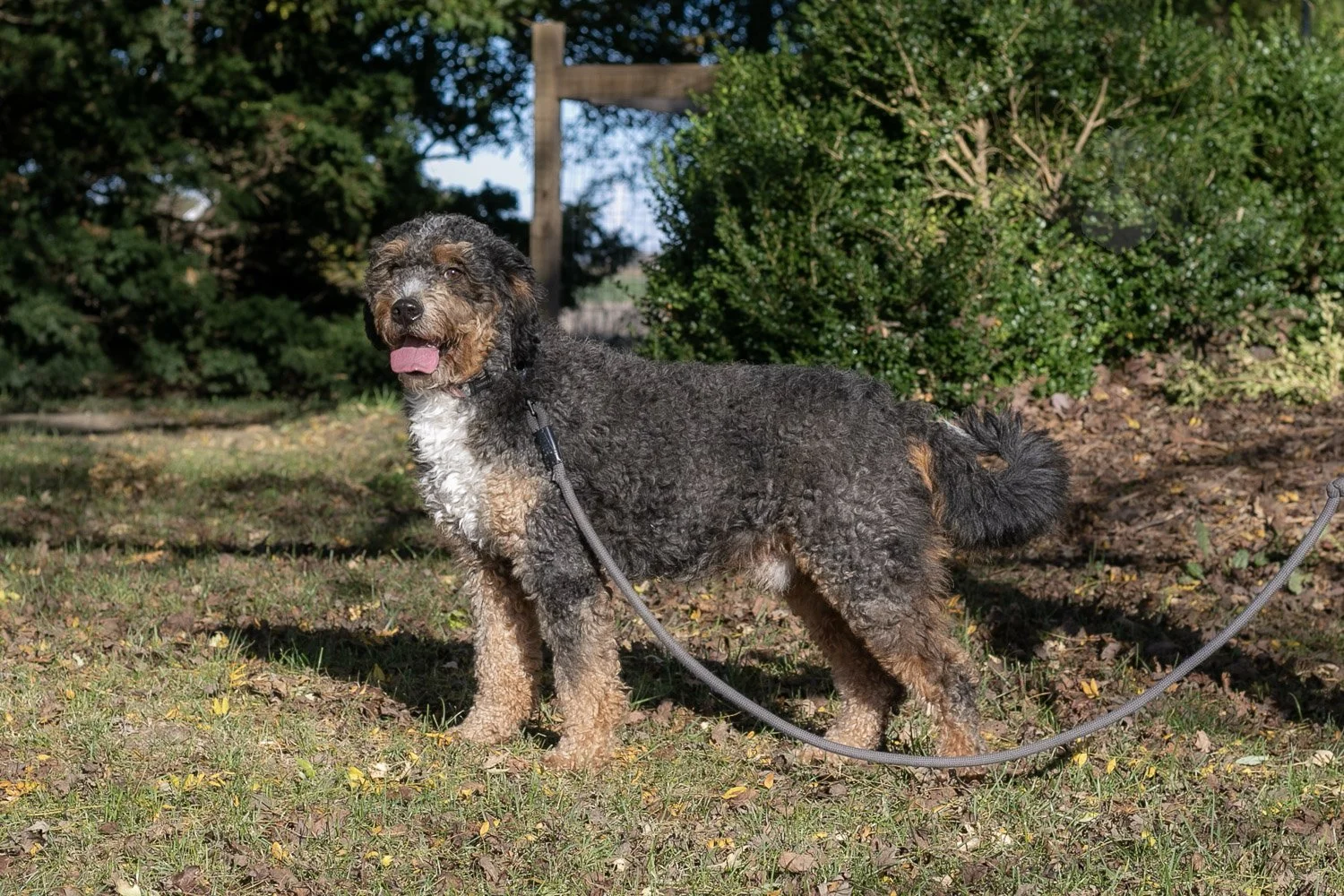
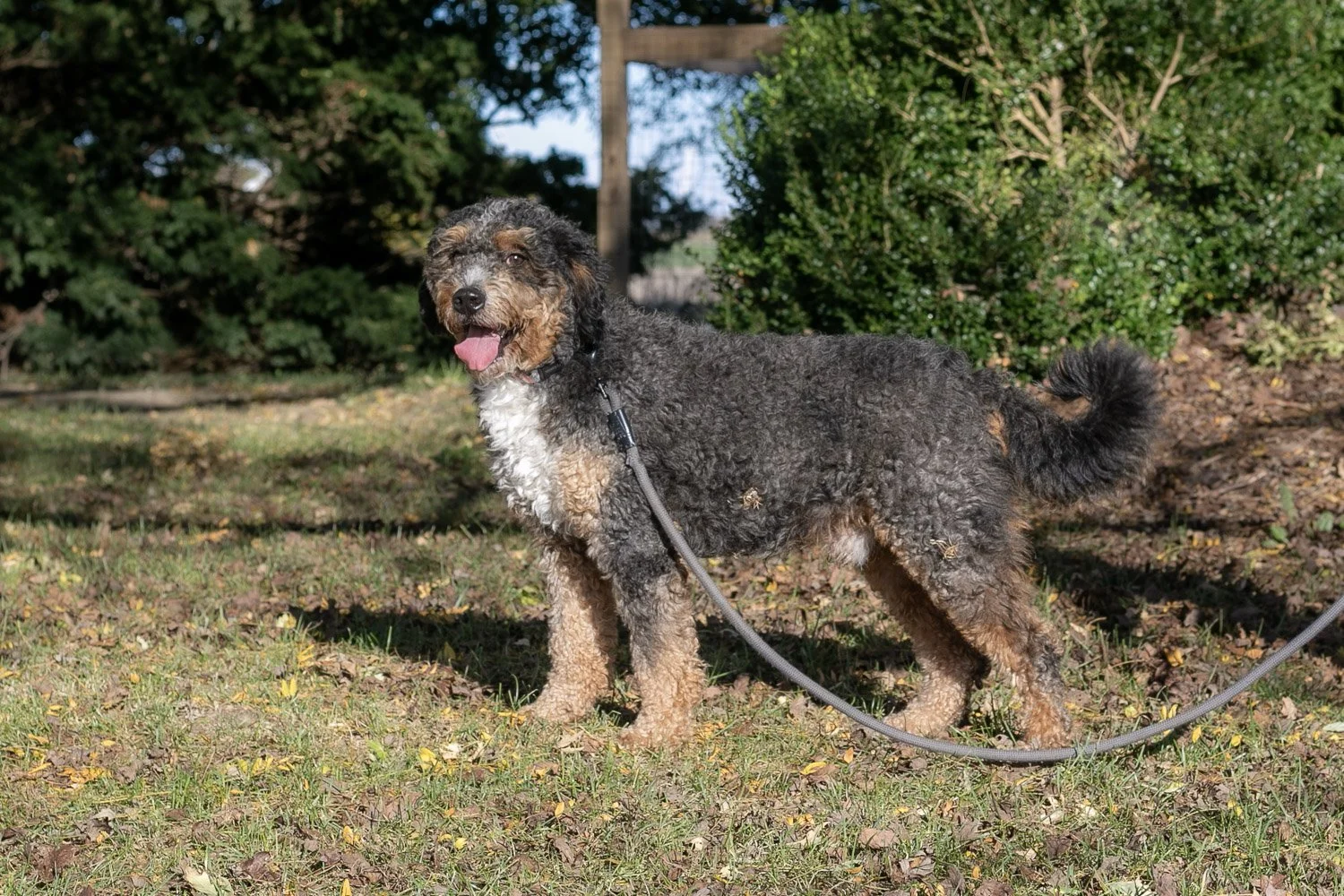
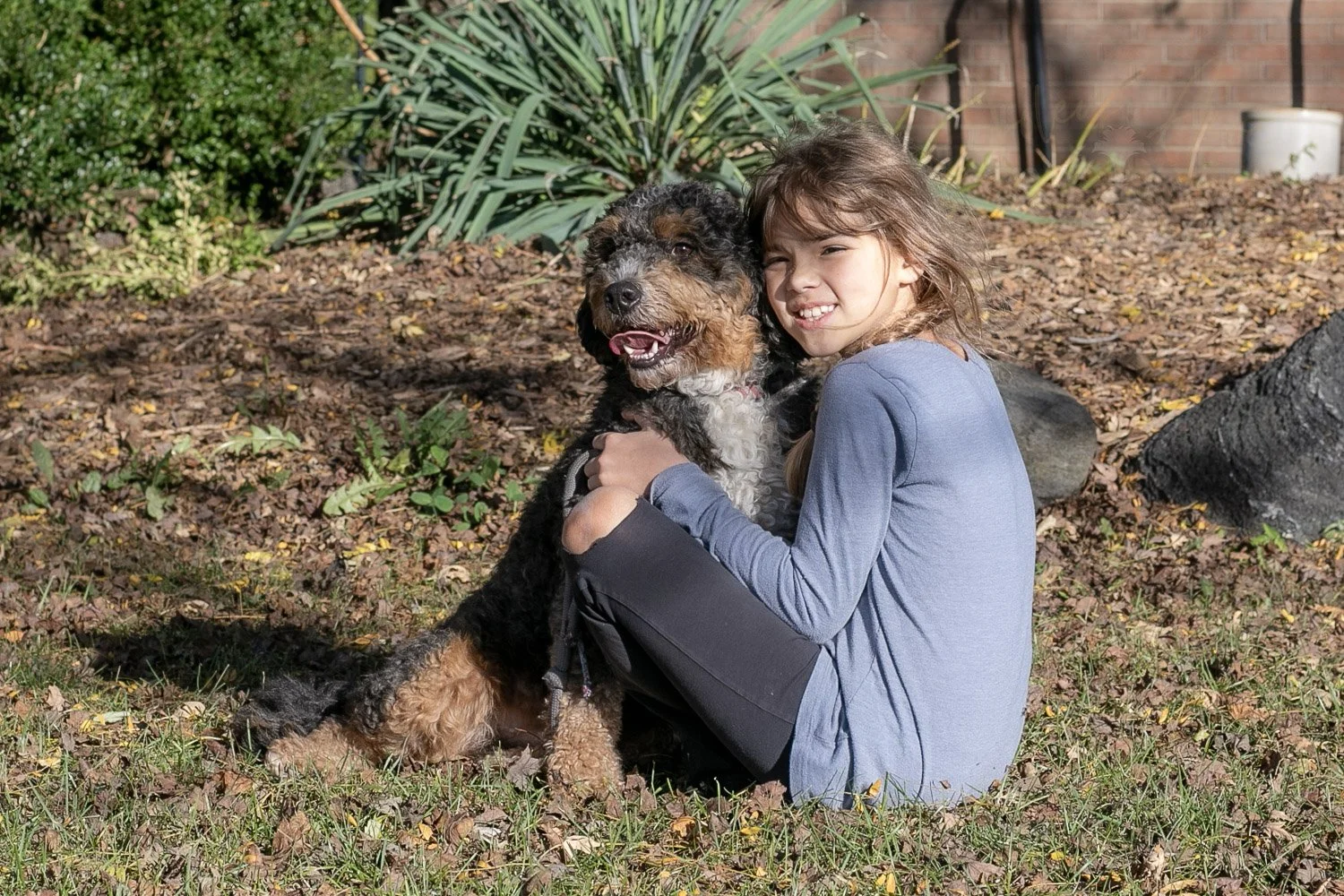
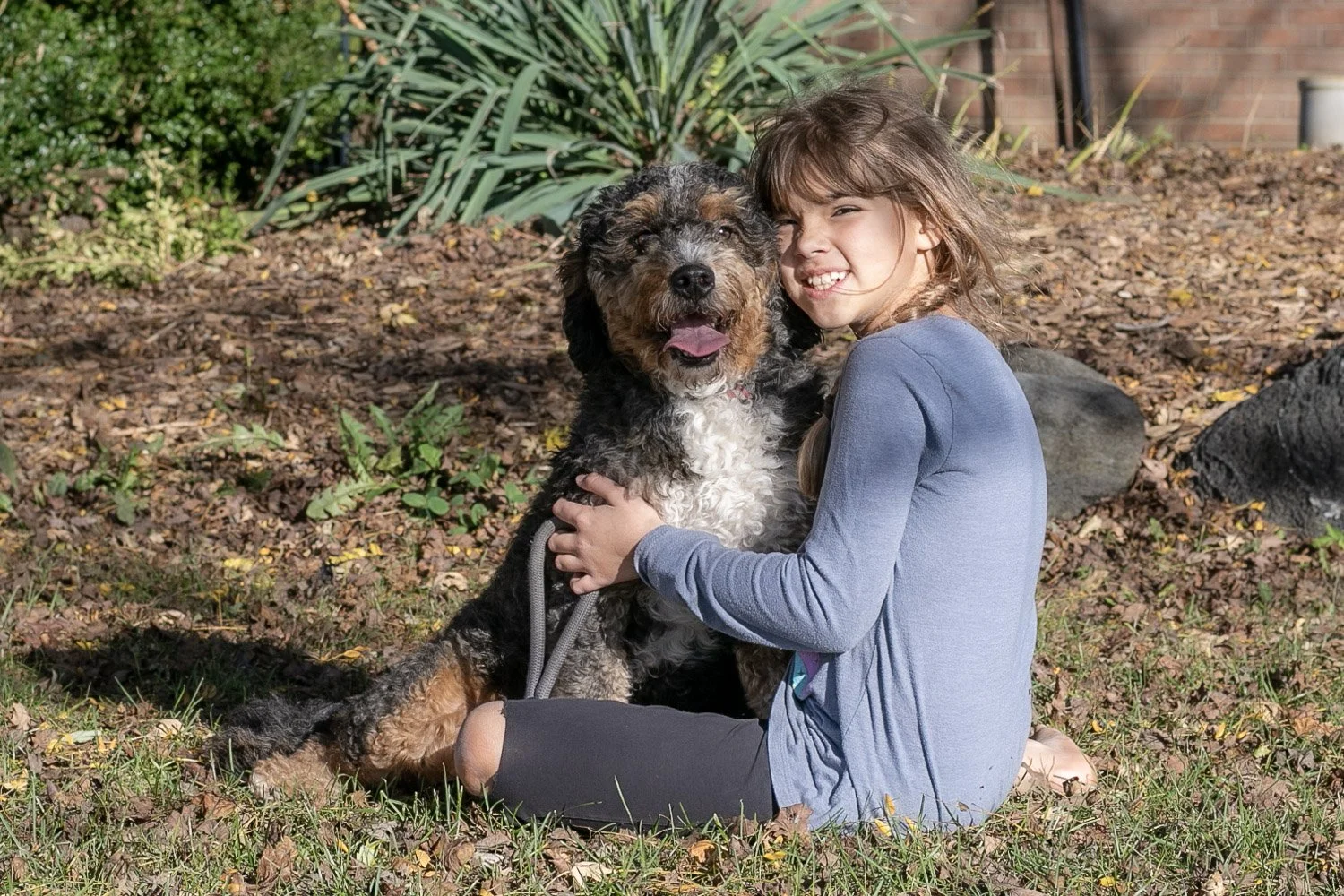
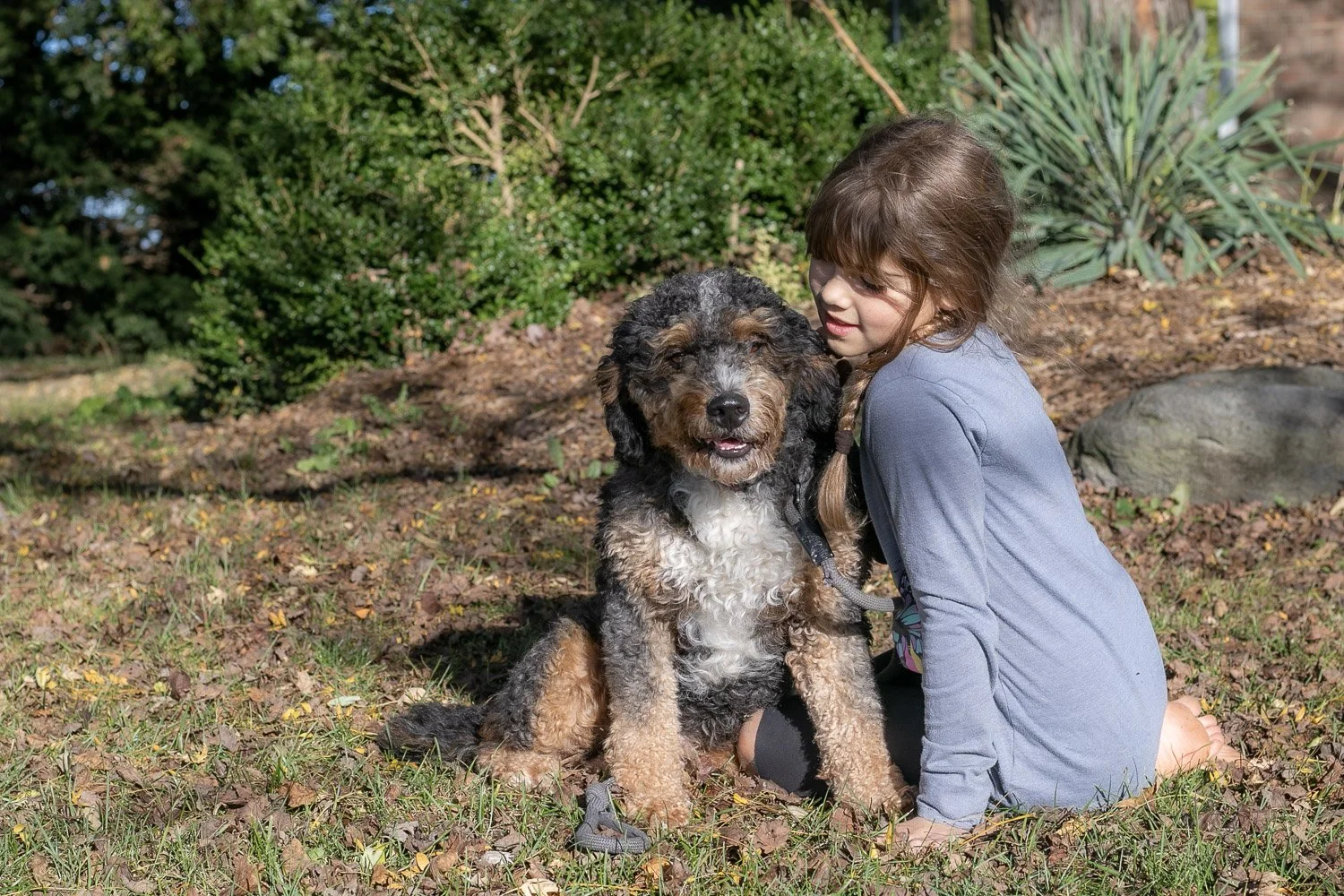
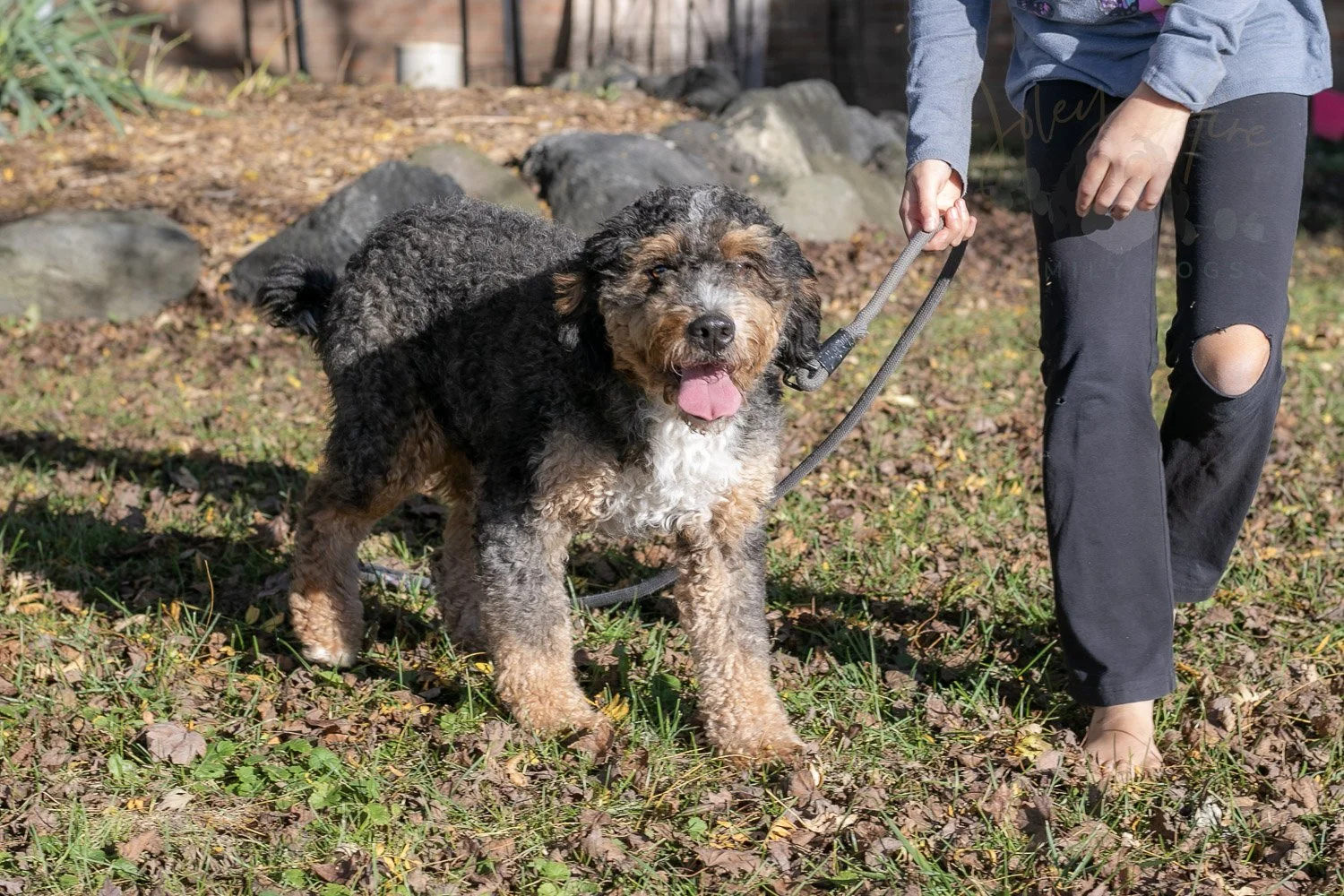
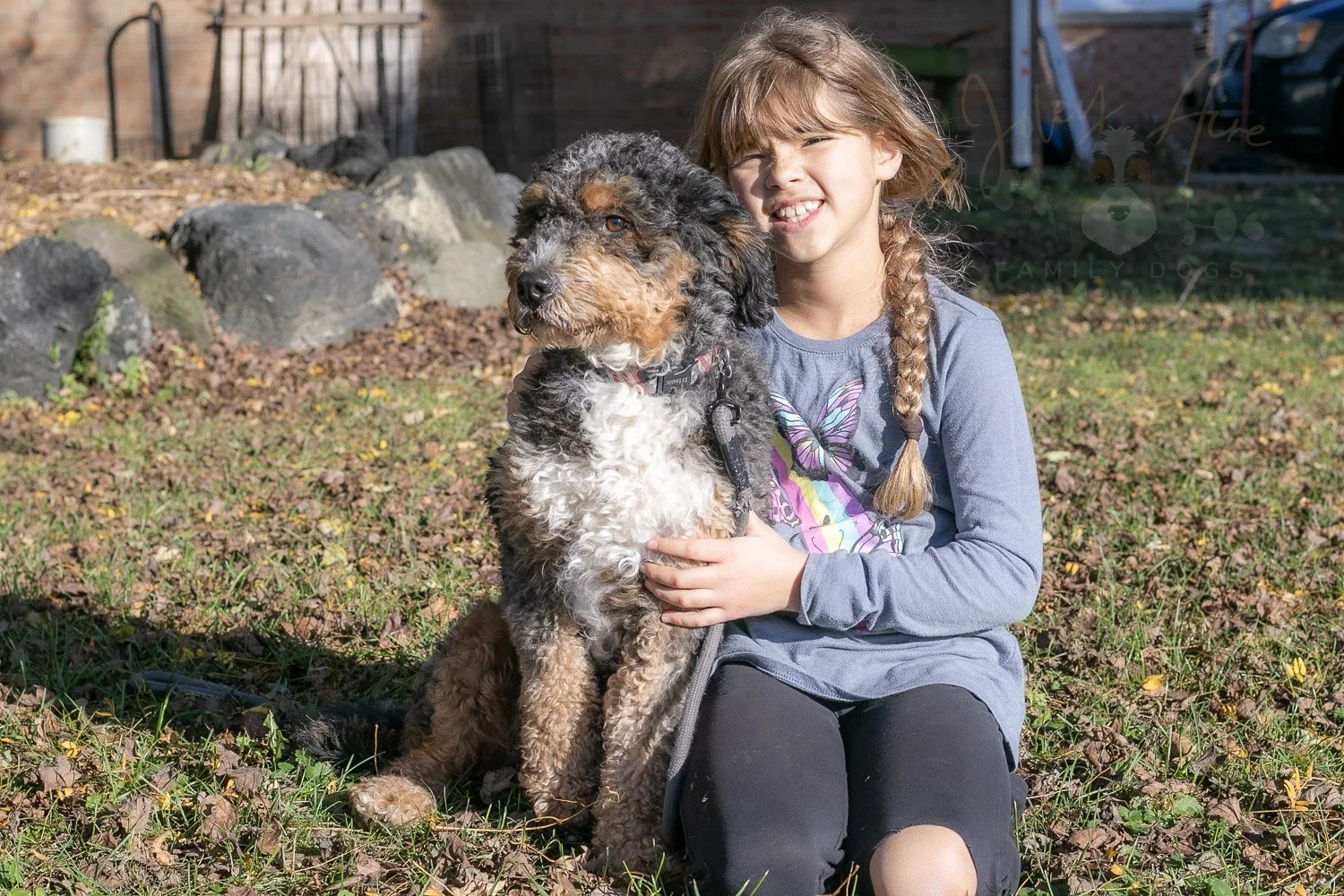
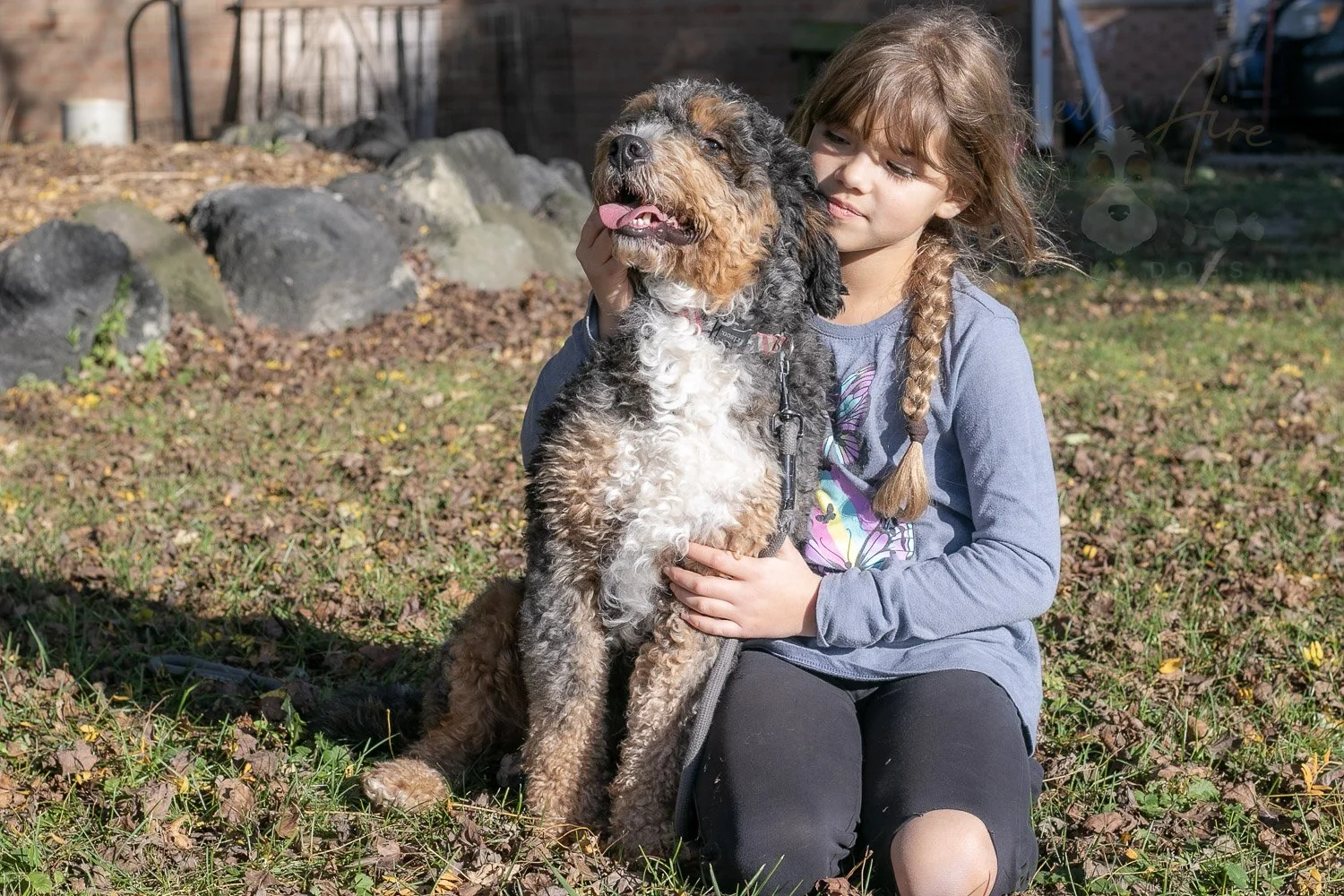
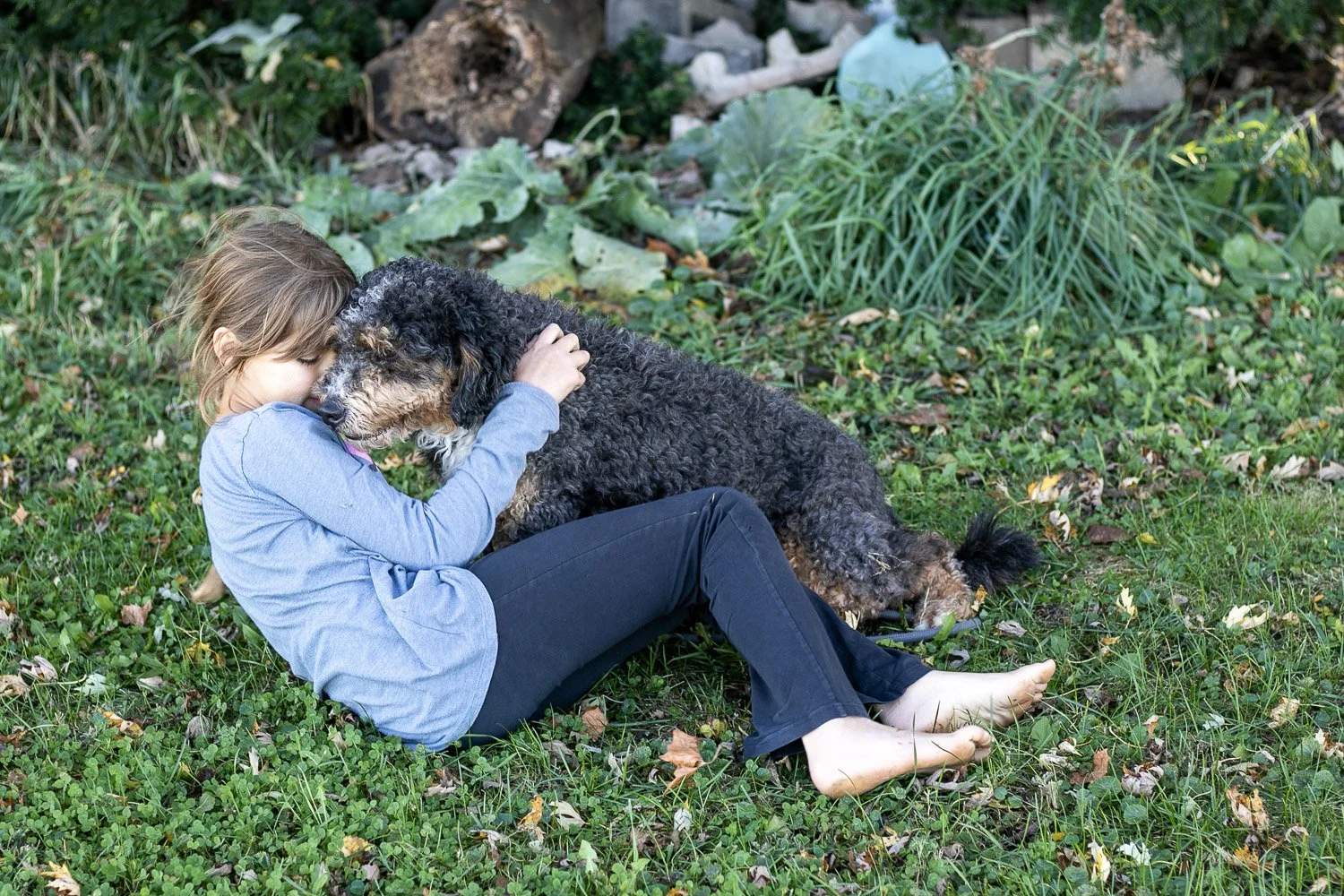
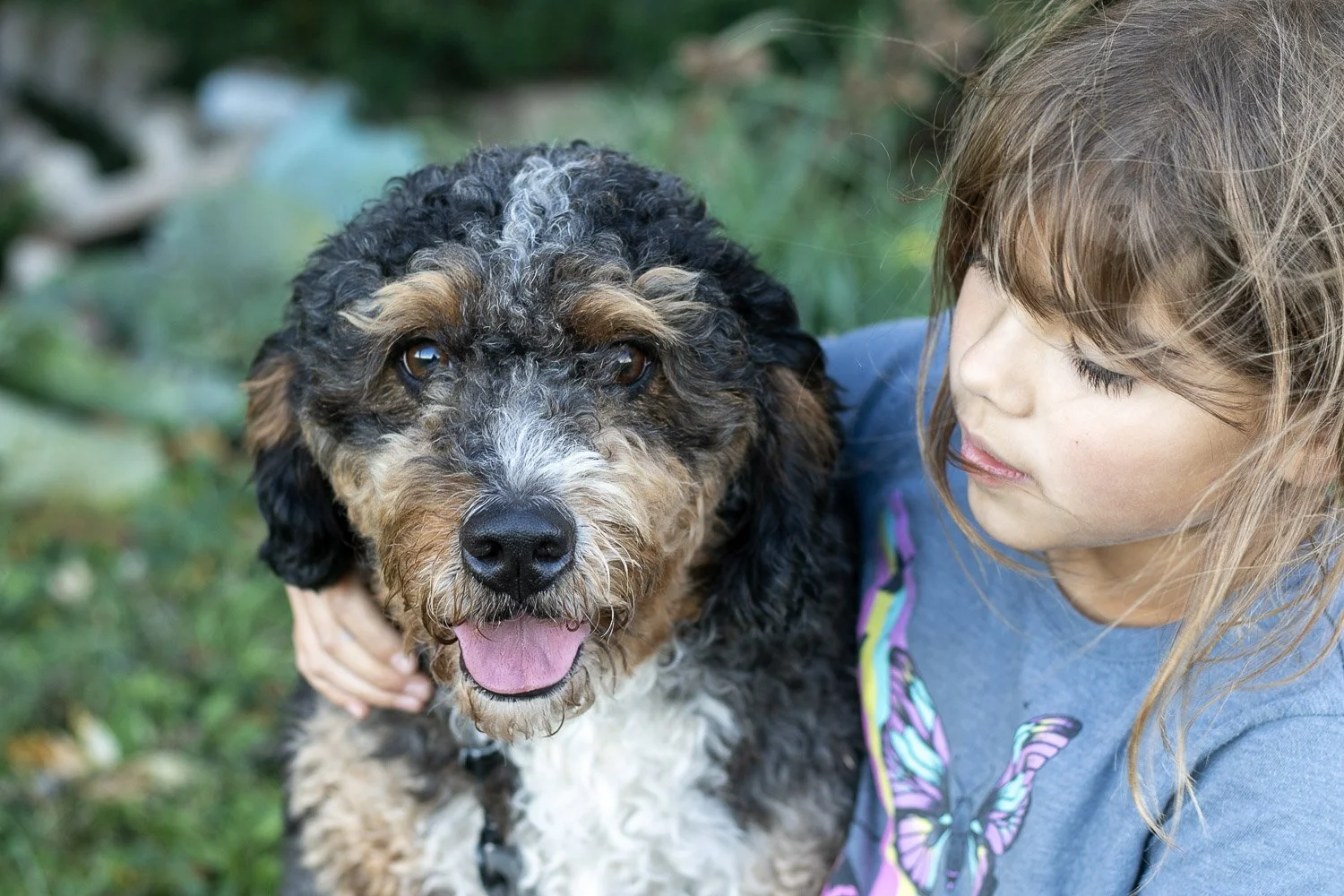
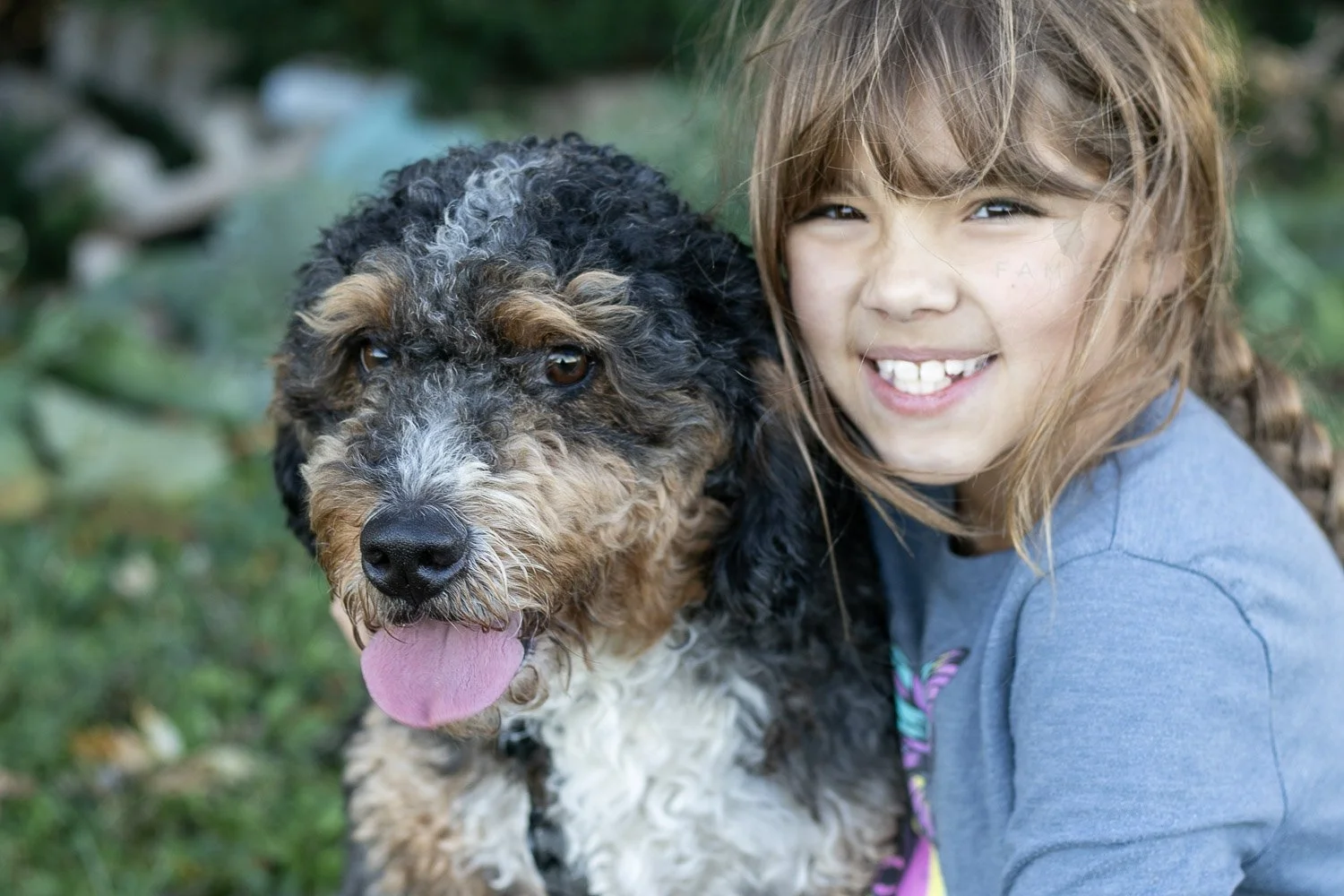
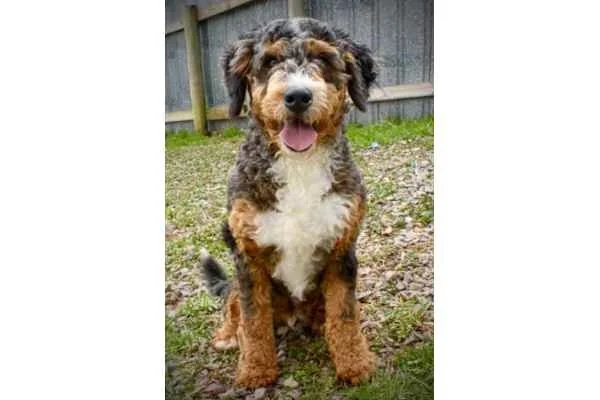
Cooper is our newest stud, a two-year-old F1 Bernedoodle who has already sired several litters. We were immediately impressed with the coloring and build of his puppies, and we're excited about what he can contribute to our program.
In the past, we've primarily used purebred Poodles as our studs and Bernese Mountain Dogs as our moms. Cooper represents a shift toward multigenerational breeding, where we can begin selecting for the characteristics we love in both breeds while working toward a higher percentage of Bernese genetics.
Let's Talk About Genetics!
Here's where things get interesting!
One of the biggest misconceptions about Bernedoodles is that the curlier the coat, the less a dog will shed.
That isn't necessarily true!
There are several genetic factors that influence a dog's coat, and one particularly important factor is something called furnishings.
Furnishings are responsible for the characteristic facial hair, beard, and eyebrows we associate with Doodles. They also play an important role in how much a dog sheds.
For a simplified explanation, let's use two letters:
F = Furnished, the dominant version of the gene
f = Unfurnished, the recessive version
A dog can have three possible combinations:
FF — Fully furnished: Two copies of the furnishing variant.
Ff — Furnished: One copy of the furnishing variant.
ff — Unfurnished: No copies of the furnishing variant.
Both FF and Ff dogs have furnishings, while ff dogs lack those characteristic Doodle facial furnishings and generally have a more traditional Bernese Mountain Dog appearance.
But Furnishings Aren't the Whole Story!
Before we go any further, I want to clarify something important: Furnishings are not the only genetic factor that determines how much a dog sheds!
Shedding is more complicated than a single gene. In addition to furnishings (controlled by the RSPO2 gene), researchers have identified another important gene, MC5R, that influences shedding. Other genes, including those affecting coat curl and length, also contribute to a dog's overall coat characteristics.
These genes interact with one another, which means that two furnished Bernedoodles can have very different coat types and shedding tendencies. Even a fully furnished (FF) dog isn't guaranteed to be completely non-shedding.
So why are we focusing so much on furnishings?
Because furnishings have a significant influence on shedding, are relatively straightforward to test for, and are one of the easiest parts of coat genetics to explain. They give us an important starting point for making thoughtful breeding decisions.
We will continue considering other coat genes as well, but for the sake of keeping this explanation understandable, we're going to focus primarily on furnishings.
And here's the exciting part: It is possible to produce a low-shedding Bernedoodle with a wavy or relatively straight coat!
That's especially appealing to us because straighter coats may be easier to brush and maintain, and they often give Bernedoodles more of that traditional Bernese Mountain Dog appearance that we love.
Of course, all Bernedoodles require regular coat care, and coat texture alone doesn't determine how much grooming a dog will need.
So, What Makes Cooper Special?
Cooper is an F1 Bernedoodle, meaning he's 50% Bernese Mountain Dog and 50% Poodle.
Because he's a first-generation Bernedoodle, he carries one copy of the furnishing variant (Ff), assuming the typical pairing of a fully furnished Poodle (FF) and an unfurnished Bernese Mountain Dog (ff).
That means he's furnished, but not fully furnished (FF).
In fact, when a fully furnished Poodle is bred to an unfurnished Bernese Mountain Dog, every puppy will inherit exactly one furnishing variant.
This is why moving beyond the F1 generation is important to our plans.
Cooper can produce fully furnished puppies, but only when paired with a female who also carries the furnishing variant. The genetics of the female we pair him with are equally important.
For example, breeding Cooper (Ff) to an unfurnished Bernese Mountain Dog (ff) would produce an expected 50% furnished and 50% unfurnished puppies. None would be fully furnished.
Since our goal is to eventually produce consistently furnished litters with more Bernese genetics, that's not the direction we want to take with Cooper right now.
Instead, we have some carefully planned pairings that will help move us toward our long-term goal.
Our First Step: Cooper × Pixie
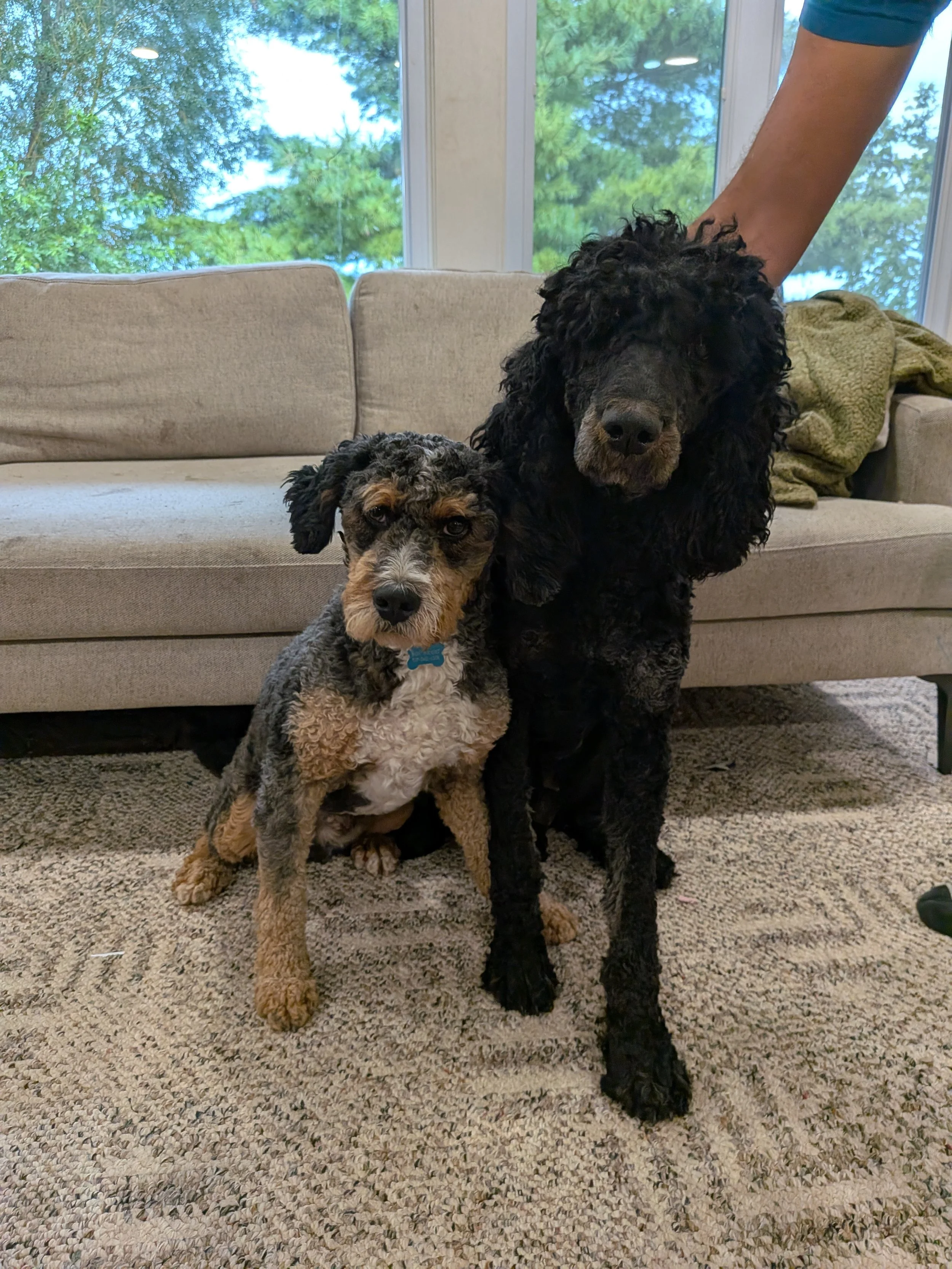
We've already bred Cooper to our Poodle female, Pixie, and we're looking forward to welcoming their puppies around Christmas!
Because Pixie is fully furnished (FF) and Cooper carries one furnishing variant (Ff), all of their puppies are expected to be furnished.
In fact, statistically, half should be fully furnished (FF), while the other half should carry one copy (Ff).
These puppies will be F1b Bernedoodles, approximately 75% Poodle and 25% Bernese Mountain Dog.
Now, there's absolutely nothing wrong with that! In fact, F1b Bernedoodles are highly desirable, especially among families looking for lower-shedding coats.
But for Joley Aire, this is just one step in a larger plan.
We're hoping to retain a fully furnished male from this litter who could eventually become another stud in our breeding program.
Of course, his health, temperament, and overall development will be just as important as his furnishings, but we're hopeful that this litter could give us an important piece of our future breeding program!
The Next Step: Cooper × Our F1 Bernedoodle Females
We also have two beautiful F1 Bernedoodle females growing up in guardian homes that we plan to pair with Cooper in the future.
This is where things get especially interesting.
Assuming these females inherited the expected furnishings from fully furnished Poodle and unfurnished Bernese Mountain Dog parents, they each carry one furnishing variant (Ff), just like Cooper.
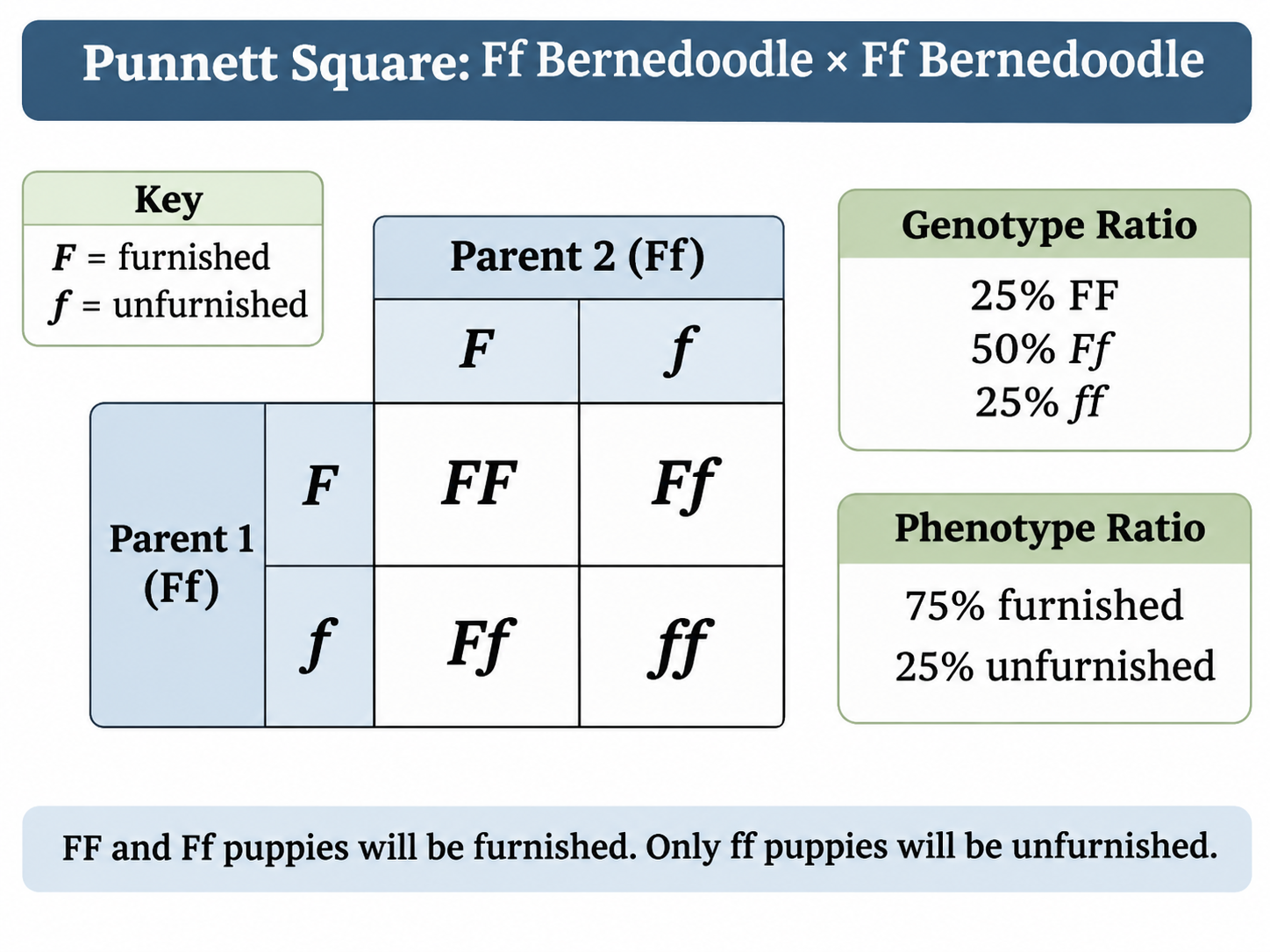
Remember those Punnett squares from high school biology?
When we breed two Ff dogs together, here's what we can expect:
25% FF — Fully furnished
50% Ff — Furnished
25% ff — Unfurnished
That means each individual puppy has a 75% chance of being furnished and a 25% chance of being unfurnished.
These are statistical probabilities, of course. We could have a litter with no unfurnished puppies, or we could have several. Genetics doesn't promise us an exact percentage in every litter!
Now, an unfurnished Bernedoodle will generally have a coat that looks much more like a traditional Bernese Mountain Dog's coat, including a greater tendency to shed.
For many people looking for a Bernedoodle, that isn't what they have in mind.
But we've decided this is a possibility worth accepting for a couple of reasons!
First, I think unfurnished Bernedoodles are absolutely beautiful! In fact, I might even prefer their appearance to furnished Bernedoodles. They have that classic Bernese Mountain Dog look that I love so much, and I believe there are plenty of families who feel the same way and don't mind the dog hair.
Second, and even more importantly for our breeding program, there is a 25% chance that any individual puppy from this pairing will be fully furnished (FF)!
That could be a very exciting opportunity for us.
And here's why.
Increasing Bernese Genetics Without Losing Furnishings
Furnishings are only part of the picture.
If that were our only goal, we could simply continue breeding our dogs to Poodles.
But we also want to increase the percentage of Bernese Mountain Dog genetics in our Bernedoodles.
That's why pairing an F1 Bernedoodle with another F1 is particularly exciting to us.
These puppies will still average approximately 50% Bernese Mountain Dog and 50% Poodle, just like their parents. That's more Bernese ancestry than the expected 25% in Cooper's puppies with Pixie.
But now, unlike a typical first-generation Bernedoodle from a fully furnished Poodle and unfurnished Bernese, there's a chance of producing a puppy that's fully furnished while still carrying approximately 50% Bernese genetics.
Jackpot!
And here's where the possibilities really begin to open up.
If we retain a fully furnished (FF) Bernedoodle from one of these litters, we could eventually breed that dog to a purebred Bernese Mountain Dog (ff).
That pairing would produce puppies averaging 75% Bernese Mountain Dog and 25% Poodle, and every puppy would inherit one furnishing variant!
They would all be furnished (Ff), even with that higher percentage of Bernese genetics.
Of course, they wouldn't be fully furnished, since they'd inherit only one furnishing variant. But we could continue selecting and planning future generations to work toward dogs with both copies of the furnishing variant and a higher percentage of Bernese ancestry.
We would also need to consider other coat genes, temperament, health, structure, and overall suitability before making breeding decisions.
But this is exactly the kind of progress we're hoping to make!
Rather than continually breeding back to Poodles to maintain furnishings, we can begin developing lines with higher Bernese genetics while carefully selecting for the coat characteristics we want.
Another Exciting Possibility: London
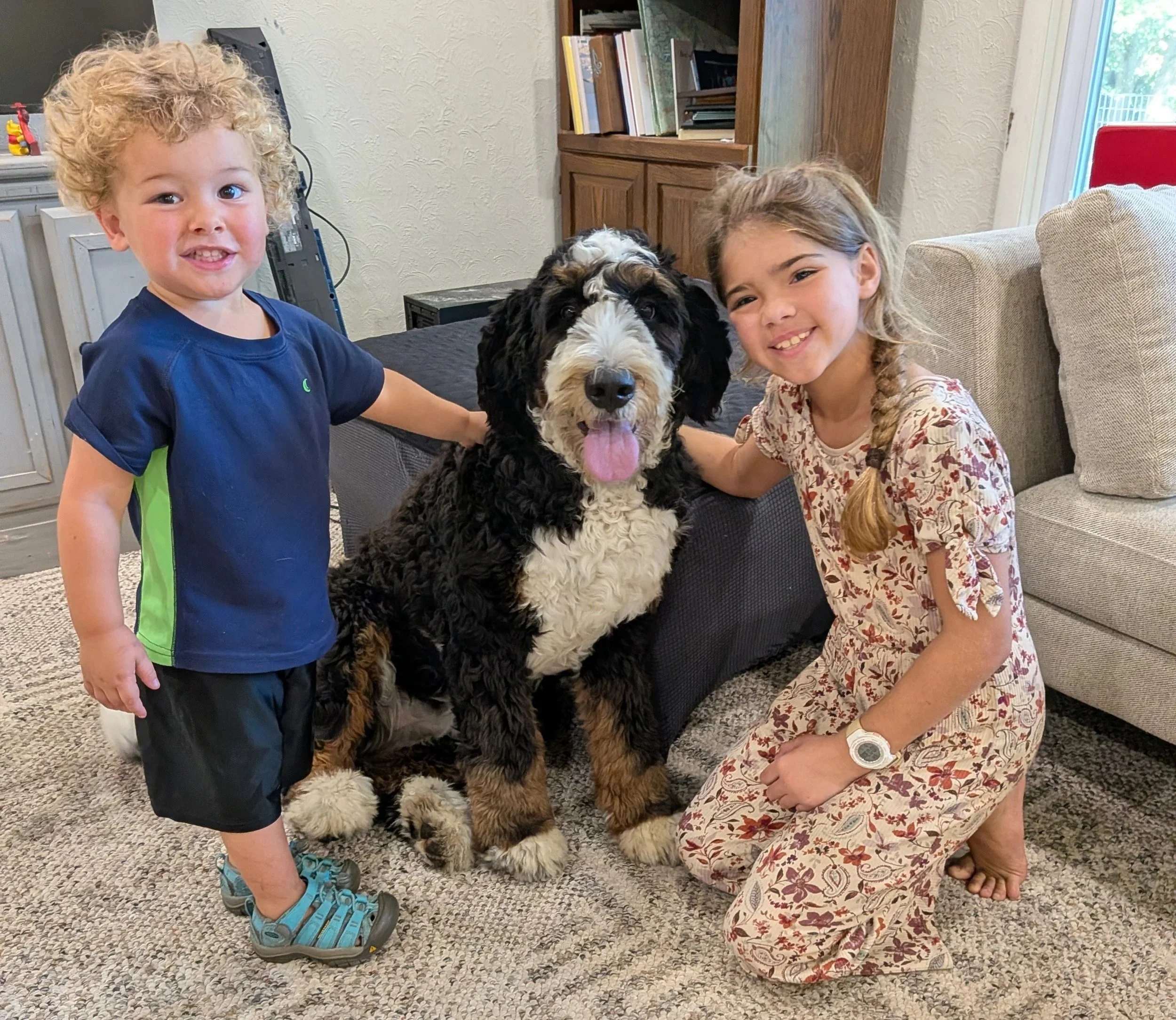
We have one more female who may play an important role in these plans.
London is our F1b Bernedoodle who is approximately 75% Bernese Mountain Dog and 25% Poodle.
We're currently waiting for her genetic testing results before deciding which direction we'll go with her.
Depending on those results, we may consider pairing her with Cooper. That combination would produce puppies averaging approximately 62.5% Bernese Mountain Dog and 37.5% Poodle.
Alternatively, we could pair London with one of our Poodles, producing puppies averaging approximately 37.5% Bernese and 62.5% Poodle.
Both possibilities have their advantages, and we'll make that decision once we have a better understanding of her genetics and which pairing best supports our goals.
It's another example of why genetic testing and careful planning are so important as we move into multigenerational breeding.
Looking Ahead: The Future of Joley Aire
As you can see, the future of Joley Aire may be a little complicated, but it's also incredibly exciting!
We're not simply trying to create Bernedoodles with higher percentages of Bernese Mountain Dog. We're working toward something more intentional: dogs that retain the temperament, coloring, and build we love about the Bernese Mountain Dog while also possessing the desirable coat characteristics that make Bernedoodles such wonderful companions.
And while genetics are fascinating, we're certainly not forgetting the other qualities that matter just as much—health, temperament, sound structure, and the ability to become wonderful family dogs.
This is going to be a process. It may take several years before we're consistently producing the kind of Ultra Bernedoodles we envision, and we're sure we'll learn a lot along the way.
But after seven years of breeding Bernedoodles, we're more excited than ever about the direction of our program!
We're thankful for the families who have supported Joley Aire over the years, and we can't wait to share this next chapter with you.
Here's to the future of Joley Aire and the next generation of Bernedoodles!