
How to Start Dog Breeding Slowly (Without Wasting Thousands of Dollars)
When people picture dog breeding, they usually see the end result.
A beautiful building.
Long waiting lists.
High-quality dogs.
Experience.
Connections.
It looks established. Polished. Profitable.
But what you don’t see is what it took to get there.
Because the truth is—there are no shortcuts in dog breeding. And getting to that level can cost hundreds of thousands of dollars if you do it wrong.
The good news?
Dog breeding is one of the few businesses where you can start very small and scale over time.
But just because you can scale easily doesn’t mean success is guaranteed. If you’re not strategic, you can either stay stuck in hobby mode forever… or burn through money way too fast.
Let’s talk about how to do this the right way.
First: Decide if This Is a Hobby or a Business
This is the mindset shift most people skip—and it’s where a lot of problems start.
If you go into breeding “just for fun,” it usually looks like this:
You have one litter.
It goes well.
So you do it again.
And again.
Before you know it, you’ve been breeding for years… but you’re still operating like a hobby.
No growth.
No structure.
No real income.
On the other end of the spectrum is the opposite mistake—scaling too fast.
Buying multiple dogs.
Investing in buildings and infrastructure.
Spending tens of thousands of dollars before you even know if you enjoy breeding.
That’s a fast way to burn out—or lose money.
What you actually want is the middle ground.
A slow, intentional build.
Step 1: Choose the Right Breed (Before You Buy Anything)
Before you even think about getting a dog, you need to choose your breed wisely.
You want a breed that:
Has strong demand in your area
Sells for a higher price point
Is relatively straightforward to breed
This decision matters more than almost anything else. A great system won’t fix a breed that doesn’t sell.
Step 2: Start With One Female
You do not need a whole program to start.
You need one good female.
And there are two mistakes to avoid here:
1. Don’t buy the first one you find.
2. Don’t spend forever searching for the “perfect” dog.
Look for an experienced breeder who offers breeding rights at a reasonable price—not someone charging a premium just because they can.
Focus on a dog whose parents have good to great hips and elbows.
Then raise her well.
Step 3: Do the Right Health Testing (Without Overcomplicating It)
Genetic testing is a must. It’s inexpensive and important.
X-rays? This is where it gets controversial.
If your dog comes from strong lines and you’ve raised her well, your puppies will likely be fine. Perfect x-rays don’t always guarantee perfect hips anyway—environment plays a role too.
Too many new breeders spend tens of thousands of dollars upfront trying to do everything “perfectly”… and then find out:
They don’t enjoy breeding
Their dog isn’t a good mom
Or she can’t get pregnant
This first litter is your test.
And that’s okay.
Step 4: Don’t Skip Socialization (This Matters More Than You Think)
Before breeding, your female needs to be well socialized.
This is critical.
If she’s not, you can run into problems like:
Being scared of the stud
Being nervous around the stud owner
Struggling in a new environment
All of that can interfere with a successful breeding.
Step 5: Breeding (Keep It Simple)
The best time to breed is usually:
Around 1.5 years old
Or on her second heat
You do not need to buy a stud.
Instead, find an experienced stud owner—ideally with a dog that improves on your female’s weaknesses (especially hips, if you skipped x-rays).
A good stud owner can also help guide you through the process.
Step 6: Whelping and Raising Puppies (Without Overspending)
You don’t need a fancy setup.
A spare room in your house works perfectly.
All you need is about an 8’ x 4’ space for the first few weeks:
Half for the whelping box
Half for the mom
You’ll just need to let her out regularly to move and exercise.
As the puppies grow, you’ll need a little more space indoors and a safe space for them to run and play outdoors.
And when it comes to spending—don’t go overboard.
Your total expenses should be around the price of one puppy, including:
A vet visit
Supplies
Puppy food
Puppy packs
That’s it.
Step 7: Use Your First Litter to Fund Growth
If you enjoy the experience, your dog does well, and you’re able to place your puppies in good homes… then you’re ready to grow.
Use the money from that litter to:
Buy another female
Potentially add a stud
Keep everything in your home. Keep expenses low.
Then follow a simple scaling rhythm:
Wait a year
Add two females
Wait another year
Replace your original females with two new ones
From there, continue adding two females every 2–3 years to maintain and improve your program.
As your dogs retire, place them in good retirement homes—don’t keep them all.
Why This Slow Approach Works
Dog breeding can be an incredible business.
It gives you:
Flexibility
The ability to work from home
Meaningful, hands-on work
Strong relationships with families
But the biggest advantage?
You don’t have to risk everything upfront.
When you build slowly:
You reduce risk
You learn as you go
You avoid expensive mistakes
You create a more sustainable program
And over time, you still end up with the same result:
A strong reputation.
High-quality dogs.
Consistent demand.
Just without the burnout or financial stress.
Want Help Skipping the Guesswork?
If you’re serious about breeding and want a clear, step-by-step system for placing your puppies (without relying on luck or word of mouth), that’s exactly what I teach inside Savvy Breeder.
👉 Join here: https://joleyaire.com/savvy-breeder
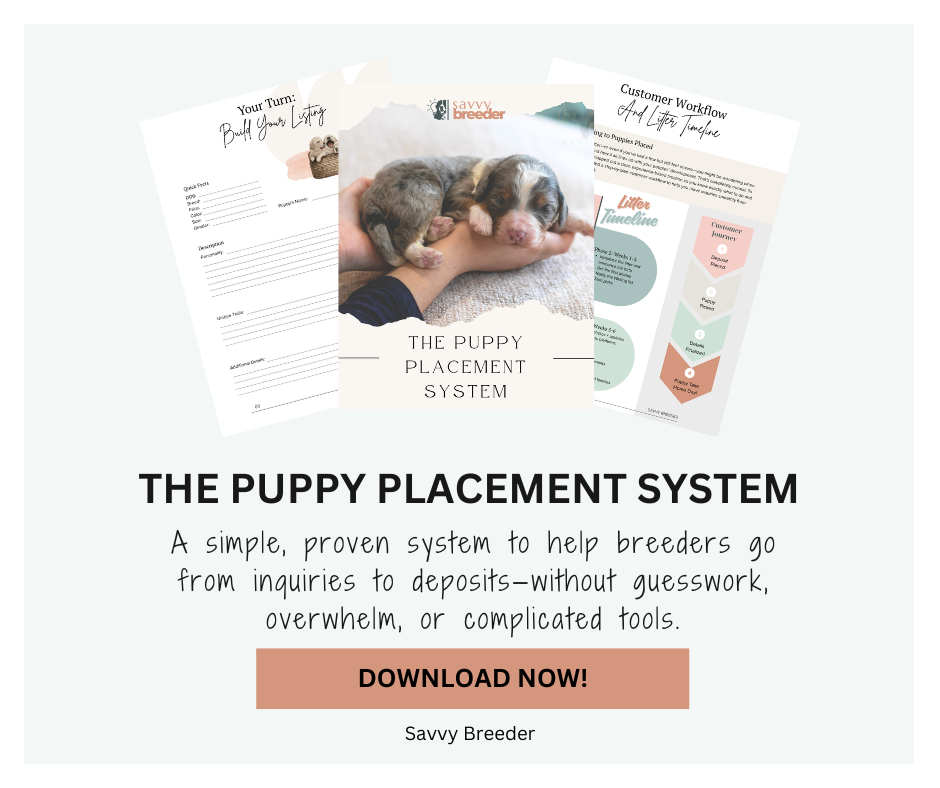
The Puppy Placement System is a simple, step-by-step guide designed to help breeders confidently place their puppies in the right homes.
If you’ve ever felt unsure about when to start marketing, what to say to inquiries, or how to move someone toward a deposit—this system walks you through it clearly.
Inside, you’ll learn how to:
Create listings that attract the right buyers
Take photos that actually get clicks
Respond to inquiries in a way that builds trust
Guide conversations naturally toward a deposit
Stay organized without complicated systems
This isn’t about fancy tools or complicated strategies. It’s a practical system built from real experience—one you can start using right away.